
The Platform Integration Paradox: Why Your AI Strategy Is Failing Before It Starts
Real AI transformation happens when you build on what’s already working.

We’ve been watching an interesting pattern emerge across the organizations we work with - and frankly, it’s keeping us up at night.
Companies are pouring resources into AI pilots. They’re hiring AI officers. They’re running proof-of-concepts that show impressive results. But then something strange happens: the momentum dies.
Last week, we sat in on a conversation that perfectly illustrated why. A data security company had just returned from an industry conference where AI was the dominant theme. Attendees were excited about AI’s potential for customer service, document processing, and operational efficiency. The energy was palpable.
But here’s what caught our attention: every conversation about AI implementation eventually hit the same wall - platform integration.
The Silent AI Killer
“Once you’re in, you’re in,” one conference attendee had noted about their industry’s cooperative ecosystem. “But you have to be integrated with the core platforms first.”
This isn’t just a technical challenge - it’s a strategic blind spot that’s quietly sabotaging AI transformation efforts across industries.
Here’s what we’re seeing: Organizations identify brilliant AI use cases. They build prototypes. They demonstrate ROI. But then they realize their AI solution exists in isolation, unable to connect with the platforms that actually run their business operations.
The result? AI becomes a sophisticated side project instead of a transformative business tool.
Why Platform Integration Isn’t an Afterthought
Think about your own organization for a moment. How many critical business processes run through third-party platforms? Your CRM, your ERP system, your industry-specific software - these aren’t just tools, they’re the nervous system of your operations.
Now imagine implementing AI that can’t talk to that nervous system. You’ve essentially built a brilliant brain with no way to control the body.
We watched this play out in real-time during that conversation. A company had developed sophisticated AI capabilities for document processing, but their prospects kept saying, “We don’t handle that internally - we outsource it to our platform providers.”
The insight that hit us: successful AI transformation isn’t just about building smarter tools - it’s about embedding intelligence into the platforms where work actually happens.
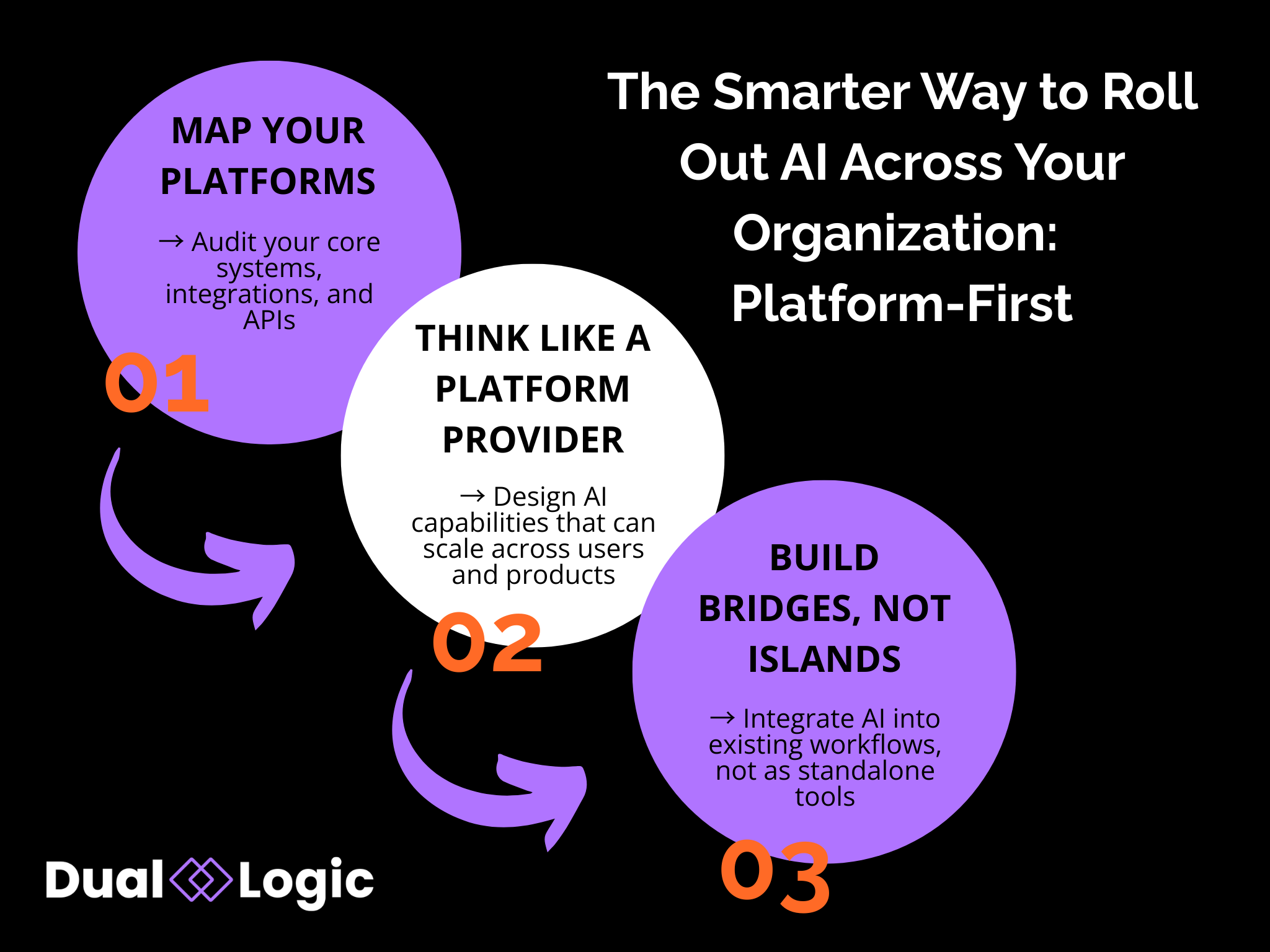
The Platform-First AI Strategy
Here’s what we’ve learned from organizations that are actually succeeding with AI transformation:
They start with platform mapping, not use case identification
Before exploring AI opportunities, they audit their platform ecosystem. What systems handle their core processes? Where are the integration points? What APIs are available?
They think like platform providers, not just end users
The most successful AI implementations we’ve seen don’t just solve problems for individual organizations - they solve problems that platform providers can offer to their entire customer base.
They build bridges, not islands
Instead of standalone AI tools, they create AI capabilities that enhance existing workflows within established platforms.
The Strategic Questions You Should Be Asking
If you’re serious about AI transformation, these questions should be at the top of your planning agenda:
Which platforms are truly indispensable to your operations?
What would it look like to embed AI capabilities directly into those platforms?
Who are the platform providers in your ecosystem, and how do they think about AI integration?
What problems could you solve that would be valuable not just to you, but to every user of your key platforms?
Why This Changes Everything
When AI is integrated at the platform level, something magical happens: adoption becomes automatic rather than optional. Users don’t have to learn new tools or change workflows. The intelligence just becomes part of how work gets done.
More importantly, platform-integrated AI scales exponentially. Instead of solving problems for one organization, you’re solving problems for entire ecosystems.
The Integration Imperative
We’re at an inflection point with AI transformation. The organizations that recognize the platform integration imperative now will build sustainable competitive advantages. Those that continue treating AI as a standalone solution will find themselves with impressive technology that no one actually uses.
The question isn’t whether AI will transform your industry - it’s whether you’ll be driving that transformation through strategic platform integration, or watching it happen from the sidelines with your brilliant but isolated AI tools.
What platforms are critical to your operations? And what would AI transformation look like if it started there instead of in your next standalone pilot project?
****
At Dual Logic, we help organizations navigate the complex landscape of AI transformation with strategies that actually integrate with how work gets done. If you’re struggling to move from AI pilots to AI impact, let’s talk about what platform-first AI strategy could look like for your organization.